· 6 min read
Why the Most Played MMOs in 2026 Are Older Than Some of Their Players
Open our most played standings and look at the birth years. A game from 2004. A deliberate recreation of a game from 2007. One from 2003 that has never once reset its world. One fr...
Open our most played standings and look at the birth years. A game from 2004. A deliberate recreation of a game from 2007. One from 2003 that has never once reset its world. One from 1997 that predates Google. The MMO genre has been declared dying more or less continuously since 2010, and yet in mid-2026 its population charts are dominated by games old enough to have a driver's license.
This isn't nostalgia distorting the data. These games aren't coasting on lapsed players revisiting for a weekend — they show up in our daily activity signals, week after week, ahead of titles with a fraction of their age and ten times their marketing budget. Something about old MMOs works, and it's worth understanding what, because it should change how you pick your next game.
The graveyard is real. The survivors are more interesting.
The standard story about MMOs is the graveyard: the parade of "WoW killers" that launched huge and evaporated. WildStar went from most-hyped MMO of 2014 to shut down in 2018. New World put up one of the biggest concurrent-player launches in Steam history in 2021 — over 900,000 people at once — and lost the overwhelming majority of them within months, eventually relaunching itself as Aeternum to reset the narrative.
The graveyard teaches an obvious lesson: launch population means nothing. But the survivors teach a subtler one. Old School RuneScape, World of Warcraft, Final Fantasy XIV, EVE Online, Tibia, Ultima Online — these didn't survive by accident, and they didn't all survive the same way. But they share four things almost none of the dead challengers had.
What the survivors actually sell
Accumulated identity. In a fresh MMO, your character is a week of decisions. In an old one, it's a decade of them. An Old School RuneScape account is a ledger of thousands of hours of deliberate choices — which is why nobody casually abandons one. Critics call this sunk cost. Players experience it as the opposite: the account is the endgame, and it appreciates.
Social gravity. MMO populations don't churn one player at a time; they churn in friend groups. Old games are held together by guilds and communities that have outlived multiple graphics card generations. EVE's player corporations function like institutions, with histories, reputations, and wars that get covered by mainstream press. You can quit a game. Quitting an institution you helped build is harder.
Trust in the cadence. This is the one new games can't buy. FFXIV and WoW have shipped major content on a predictable rhythm for over a decade. Old School RuneScape goes further: nearly every significant change is polled to the playerbase and needs roughly 70% approval to enter the game. Tibia has been updated continuously since 1997. Committing to an MMO is a bet on its future, and these games have decades of receipts. A new game asking for hundreds of your hours is asking you to bet on a roadmap it hasn't proven it can deliver.
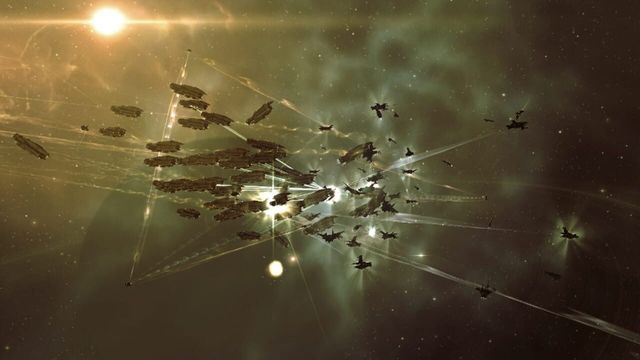
Worlds with history. EVE has run a single persistent universe since 2003 — its market data, territorial politics, and grudges are twenty-three years deep. Housing plots in Ultima Online have changed hands for longer than some of their owners have been alive. A world where things happened, and stayed happened, feels different from a world stamped out of fresh instances, and players can tell.
Old does not mean frozen
The trap in this argument is imagining these games as museums. They're the opposite — they're some of the best-run live games in the industry.
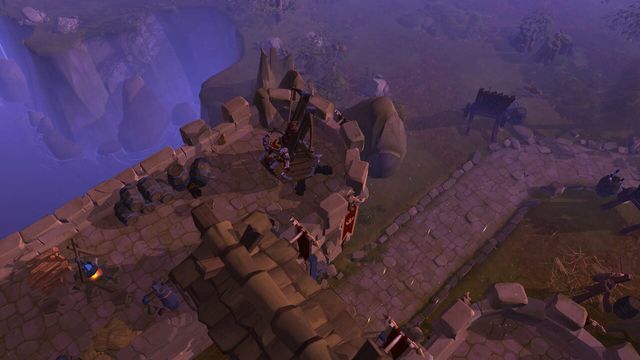
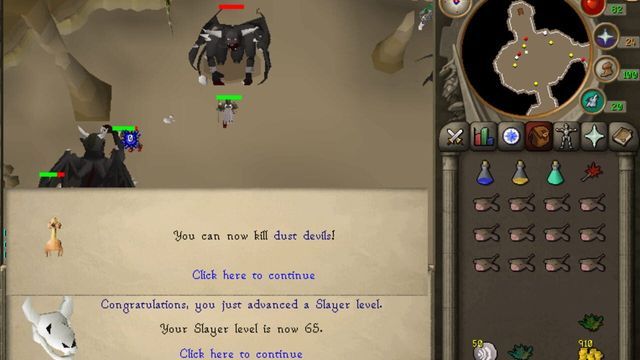
Old School RuneScape is the clearest case: a 2007 snapshot of RuneScape, relaunched in 2013, and then operated like a modern live-service game — frequent updates, new endgame content, all of it player-approved before shipping. It's simultaneously the most conservative and one of the most actively developed MMOs on the market, and our numbers consistently place it among the healthiest games we track — often ahead of RuneScape proper, its own modern successor.
WoW learned a version of the same lesson, running Classic timelines alongside modern retail — effectively admitting that different eras of your own game are different products with different audiences. The pattern generalizes: the survivors treat their past as a feature to be maintained, not technical debt to be replaced.
Why age compounds
There's also plain economics underneath the romance. A player starting FFXIV today walks into a decade-plus of accumulated expansions, systems, and story for the price of one game. A player starting a year-old MMO gets a year of content, usually stretched thin. The old game is simply a better deal per hour, and it gets better every year while the young game struggles to keep pace with its own players' consumption speed.
That's the compounding loop: content accumulates, communities accumulate, trust accumulates — and population follows all three. It's why the population chart of the genre looks the way it does, and why it will probably still look that way in 2030.
What this means when you're choosing a game
Three practical takeaways from the data:
- Ignore launch spikes; read the six-month curve. Every MMO launch of the last five years spiked and fell. What separates the keepers is where the curve flattens. Our trending page shows you direction, not just size.
- Don't price in graphics. The engine age of Tibia, OSRS, and EVE has cost them nothing where it counts. If dated visuals were fatal, our standings would look completely different.
- A stable old population beats a large new one. The game with 40,000 players it's had for five years is a safer home for your time than the one with 200,000 it gained last month — because you now know exactly how those stories tend to go.
The genre's newest games are trying some genuinely new ideas — more on that in another post. But if the question is simply where are the people, and where will they still be next year, the answer in 2026 is the same as it was in 2016: mostly in worlds that were built before some of their players were born. The standings are right there. The old guard isn't going anywhere.