· 6 min read
The Survival Sandbox Takeover: Why New MMOs Don’t Look Like WoW Anymore
Scroll through our upcoming games list or the last two years of major MMO launches and try to find a quest hub. You'll find hunger meters instead. Crafting benches, land deeds, ter...
Scroll through our upcoming games list or the last two years of major MMO launches and try to find a quest hub. You'll find hunger meters instead. Crafting benches, land deeds, territory claims, base raids. The hotbar-and-exclamation-mark formula that defined the genre for twenty years has quietly stopped being what new MMOs are made of — and the new generation looks less like World of Warcraft and more like Ultima Online by way of Rust.
This isn't a coincidence or a fad. It's the predictable result of the economics of running an online world, and understanding it will make you better at judging which of these new worlds deserve your time.
Exhibit A: the class of 2024–2025
Look at what actually shipped recently and found an audience:
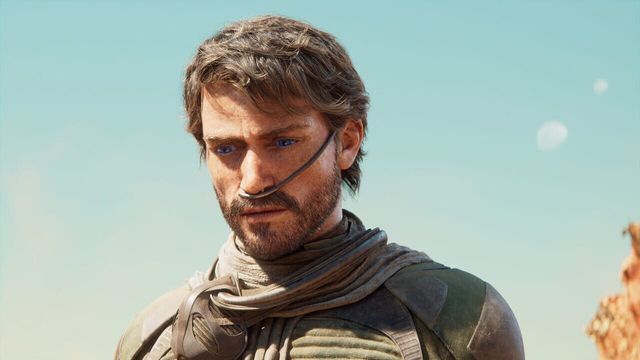
- Dune: Awakening (Funcom, June 2025) — a full survival game wearing MMO structure: water discipline, base building, and a shared Arrakis whose deep desert is a lawless PvP frontier. Funcom's biggest launch ever, and the clearest proof yet that "survival MMO" is a genre players were waiting for rather than a compromise.
- BitCraft (Clockwork Labs, June 2025, early access) — the radical one: a peaceful, wholly player-built civilization sim where the towns, roads, markets, and even the wilderness reclamation are all player labor. No factions handed down from above; society is the content.
- Pax Dei (Mainframe Industries, June 2024, early access) — a medieval social sandbox that barely gestures at NPC content. You and your clan claim land, raise villages, and make your own reasons to exist. It's an MMO that refuses to tell you what to do, on purpose.
- Once Human (Starry Studio, July 2024) — post-apocalyptic survival crossed with a looter, running on seasonal resets: worlds that periodically wipe and remix their rules, churn by design rather than by failure.
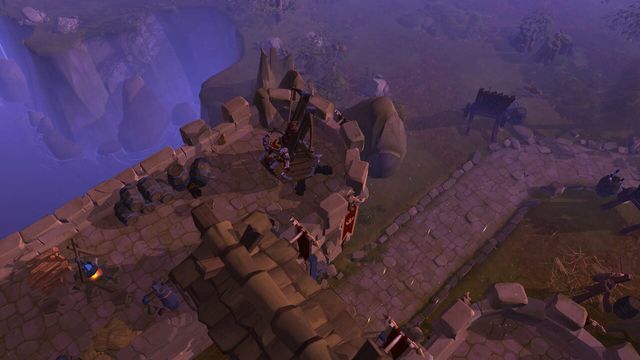
And behind them, the bridge generation that made this possible: Conan Exiles and Fallout 76, survival games that grew persistent-world ambitions, and Albion Online, which has spent nearly a decade proving that a full-loot, player-driven economy can sustain a large, genuinely cross-platform population. Even Ashes of Creation, the most anticipated traditional-looking MMORPG in development, is a sandbox at its core — its node system makes the world's cities rise and fall based on where players actually go.
Why nobody builds themeparks anymore
The themepark MMO — curated questlines, scripted dungeons, raid tiers — has a brutal structural problem: players consume content orders of magnitude faster than developers can produce it. A zone that takes a team months to build gets cleared in an evening. WildStar is the canonical cautionary tale: a lavish, genuinely good themepark that launched in 2014, got devoured in weeks, and never financially recovered from the gap between content patches. It shut down in 2018.
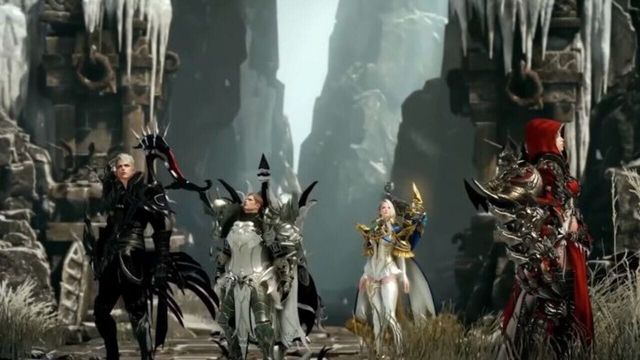
The incumbents survive this because they're incumbents. Final Fantasy XIV and World of Warcraft can sell a new player a decade of accumulated content while a thousand-person operation builds the next expansion. A new studio gets neither the back catalog nor the patience. The only recent themeparks that made a real dent came from giants — Throne and Liberty shipped globally on NCSoft and Amazon's shoulders — and even those lean hard on large-scale PvP, which is to say: on players entertaining each other.
The sandbox flips the equation entirely. In Albion, the gear you wear was crafted by a player from materials gathered by a player, and losing it in a fight feeds demand back into that loop. In Pax Dei and BitCraft, the world itself is the players' work product. In Dune, the political map of the deep desert is written weekly by guild warfare. Players are the content treadmill, and survival mechanics — hunger, decay, loss — are the engine that keeps them running it: consumption sinks that create demand, stakes, and stories without a single quest designer's involvement. A mid-sized studio can afford to build that. It cannot afford to out-produce its own players forever.
The catch — read this before you buy a land deed
Population data on these games comes with patterns you should know about, because we watch them play out in our charts over and over.
Survival-adjacent games are volatile by nature. The launch spike and steep decay curve is practically a genre signature — some of it is tourists leaving, and some of it (as with Once Human's seasons) is deliberate design. A scary-looking first-month drop isn't automatically a death sentence; what matters is where the curve settles and whether it recovers on content beats. Judge these games on our trending page at month three, not on their launch headlines.
Early access is the default, not the exception. Pax Dei and BitCraft both shipped unfinished on purpose. You're not buying a product; you're buying a bet on a roadmap, with wipes and reworks as live possibilities.
Sandboxes degrade with emptiness faster than themeparks do. A quiet themepark still has its quests. A quiet sandbox is a ghost town by definition — the market stalls, the wars, the neighbors are the game. This cuts both ways: it's why a thriving sandbox feels alive like nothing else in gaming, and it's why checking actual population before committing matters more here than anywhere else. That is, not coincidentally, the entire premise of this website.
Which one fits you
- You want narrative stakes with your survival loop → Dune: Awakening. The strongest fiction in the category and the most complete game at launch.
- You want to build a civilization, not fight one → BitCraft or Pax Dei — BitCraft if you like the idea of a society-scale group project, Pax Dei if your clan wants its own medieval valley. They make an instructive side-by-side comparison.
- You want loot pressure and seasonal freshness → Once Human, with the caveat that resets are the lifestyle.
- You want the proven one → Albion Online. Nine years old, cross-platform, economically bulletproof, and still the reference implementation of the player-driven MMO.
None of this means the themepark is dead — FFXIV and WoW will be shipping expansions long after several games in this post are memories, and that's its own lesson about incumbency. But if you're wondering what the next great MMO looks like, stop watching for a WoW killer. The new worlds aren't trying to out-Blizzard Blizzard. They're handing players the tools, the stakes, and the land registry — and betting that we'll build the game ourselves.
Watch how those bets are landing, in real numbers, on the standings.